19th Century Sailor’s Woolie of a British Steam Frigate, circa 1850
19th Century Sailor’s Woolie of a British Steam Frigate, circa 1850
$4,800.00
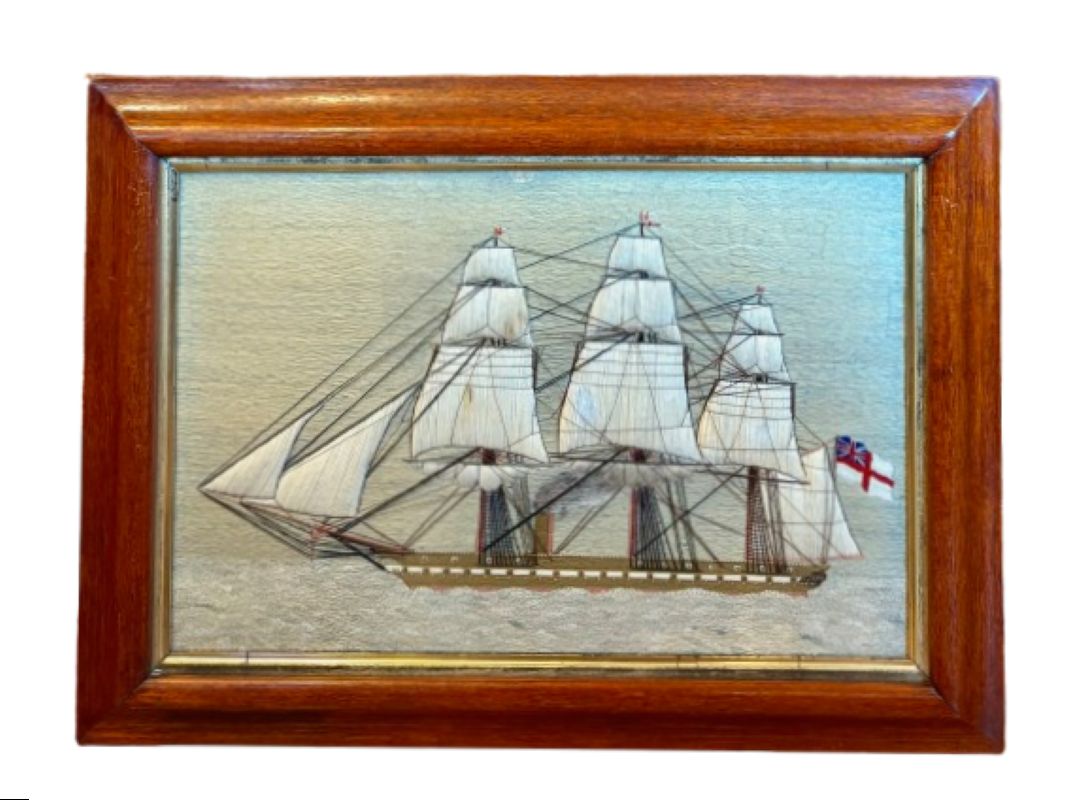
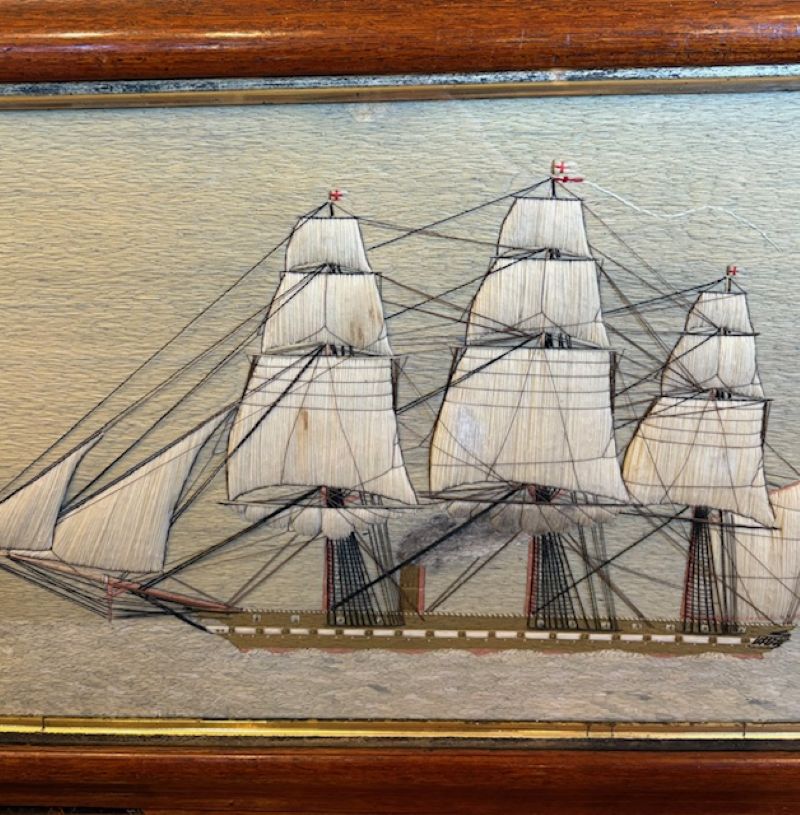
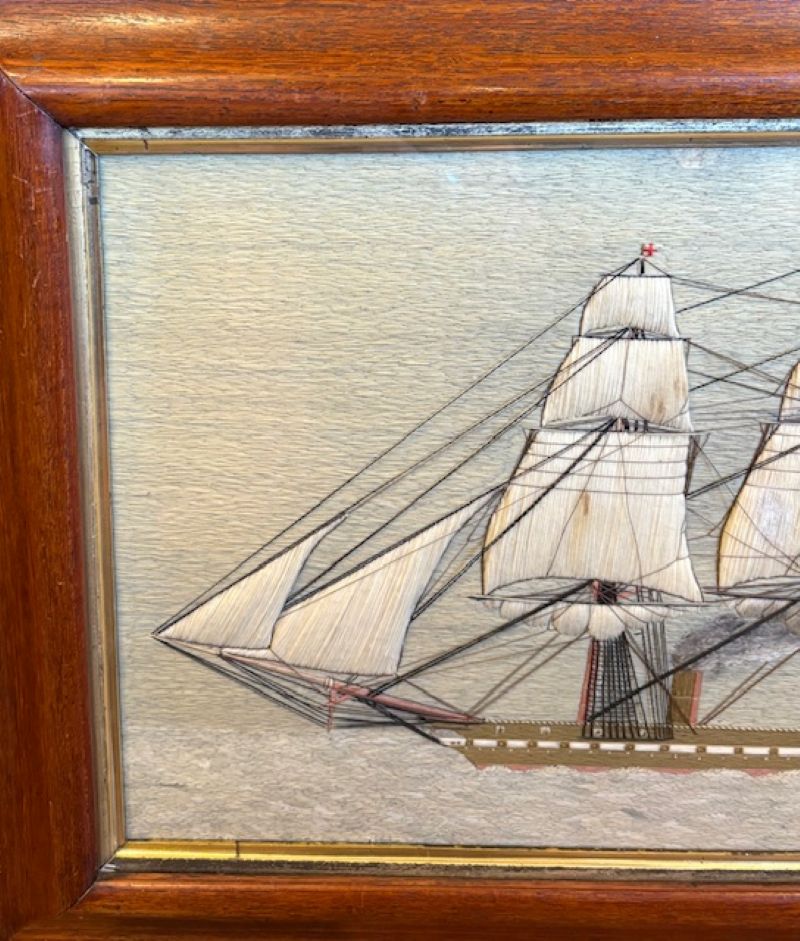
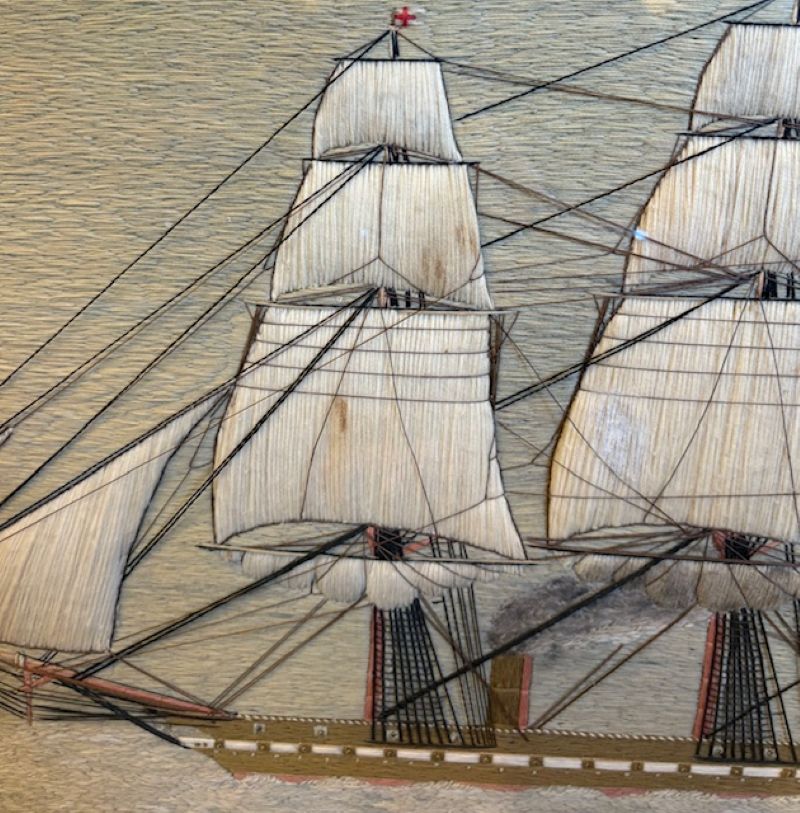
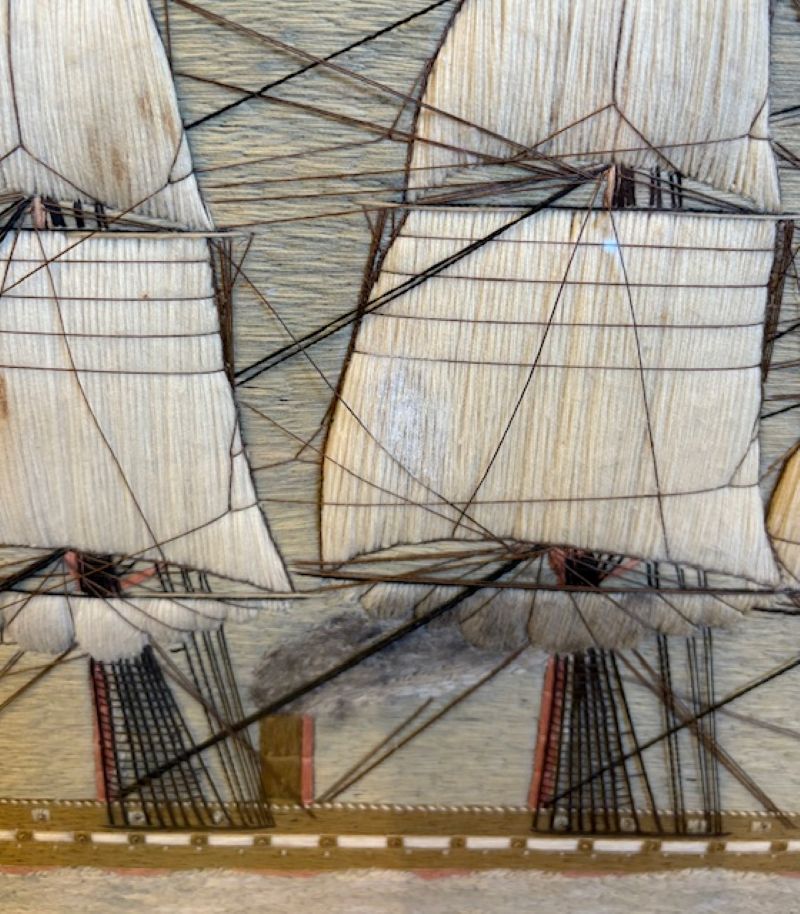
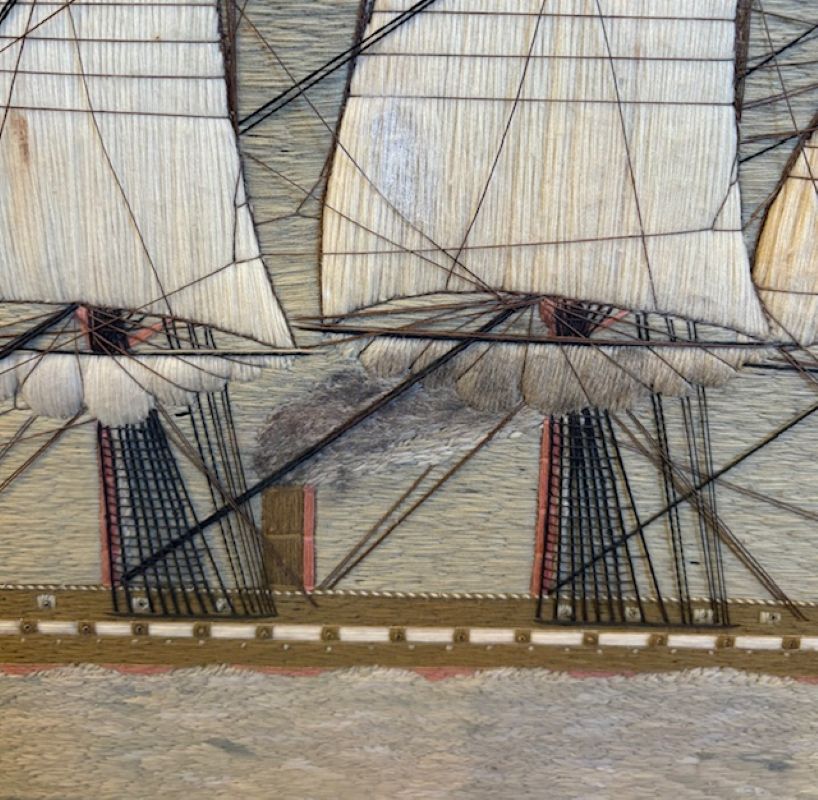
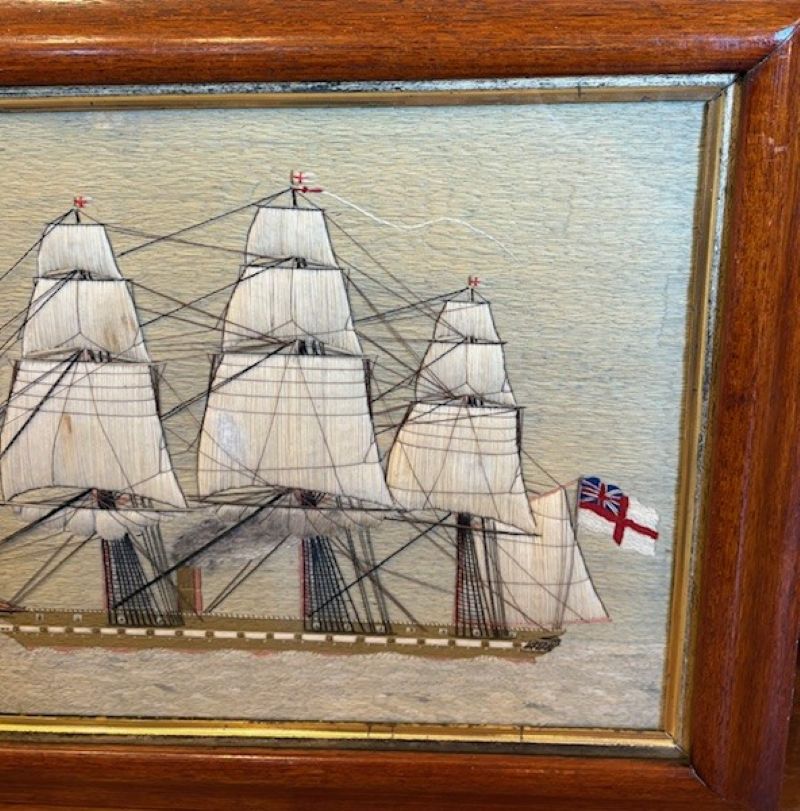
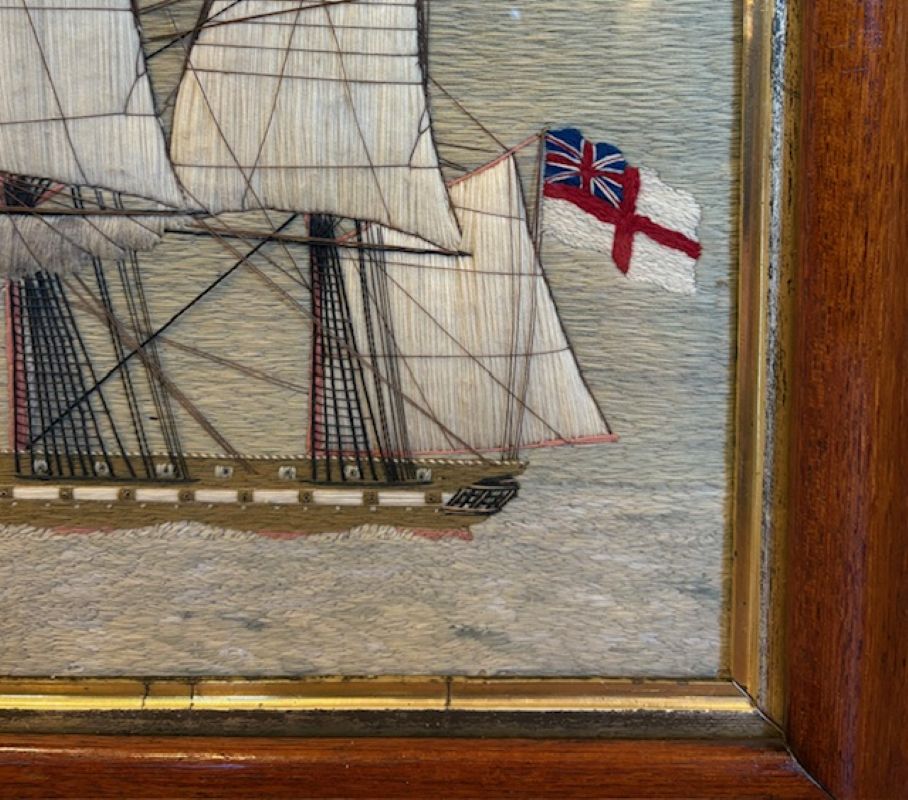
19th Century Sailor’s Woolie of a British Steam Frigate, circa 1850, a hand crafted sailor’s woolwork picture with larboard side view of a British Naval Auxiliary Steam Frigate under full sail, fore and main coarses furled, smoke billowing from stack (note the sooty discoloration on the furled mainsail, flying the Ensign of the White Fleet at the stern, Admiral’s pennant at the main peak, and burgees at all mastheads, on a subtle but very sophisticated blue-green ocean done in very complex stitches, and under a calm pastel sky.
In stock
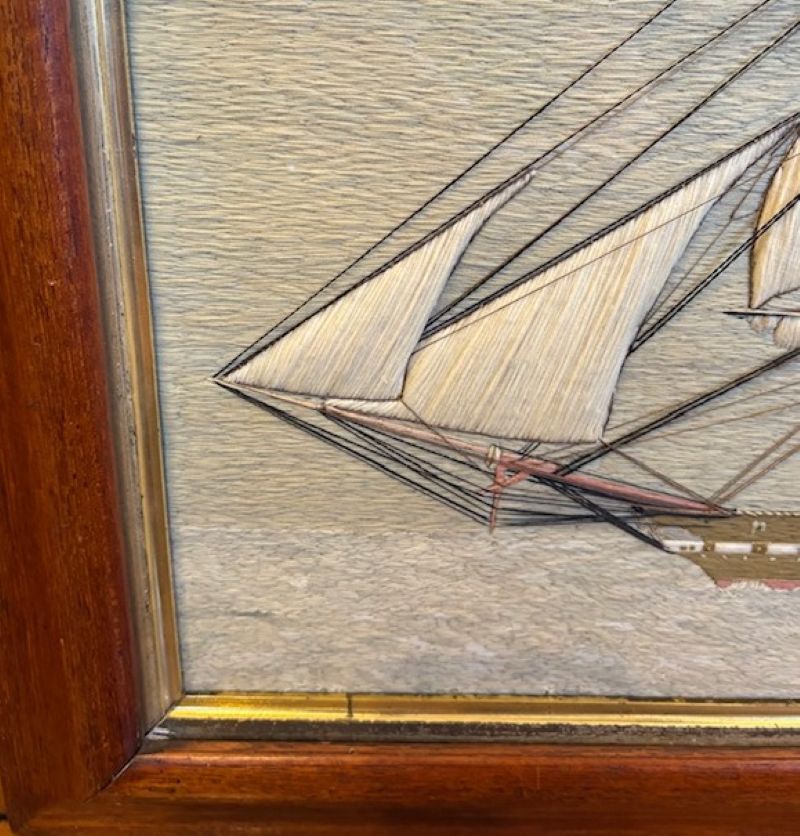
19th Century Sailor’s Woolie of a British Steam Frigate, circa 1850, a hand crafted sailor’s woolwork picture with larboard side view of a British Naval Auxiliary Steam Frigate under full sail, fore and main coarses furled, smoke billowing from stack (note the sooty discoloration on the furled mainsail, flying the Ensign of the White Fleet at the stern, Admiral’s pennant at the main peak, and burgees at all mastheads, on a subtle but very sophisticated blue-green ocean done in very complex stitches, and under a calm pastel sky. The sailor depicted complex and detailed rigging, and used quite a large variety of very accomplished stitches throughout.
The woolie remains in excellent condition, mounted in original, possibly ash, frame with gilt filets.
Sailor’s woolworks were a craft taught at British Naval Hospitals, and were in effect the world’s first occupational therapy. The majority were made between the 1830s and 1880s, and while sailors then turned to other crafts in vogue, some were occasionally made up to the World War I era. The sailors who took to the craft continued to make them in ever more elaborate and fanciful patterns after release, to sell to locals and tourists in order to support themselves.
Even those woolies depicting American or other nation’s flags were made by the British sailors (they knew their market well)! However, a very small percentage were also made by Trinity House lighthouse keepers, and a tiny amount by sailors from other nations (who most likely had served at one time on a British ship).
Measures: 13-1/2 in H x 20-5/8 in W
Framed: 18-7/8 in H x 26-1/8 in W