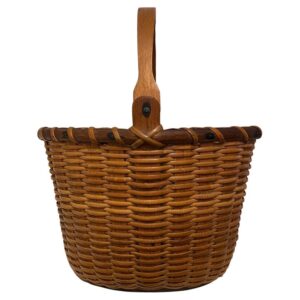
Nantucket Purse by Jose Formoso Reyes, signed, circa 1955
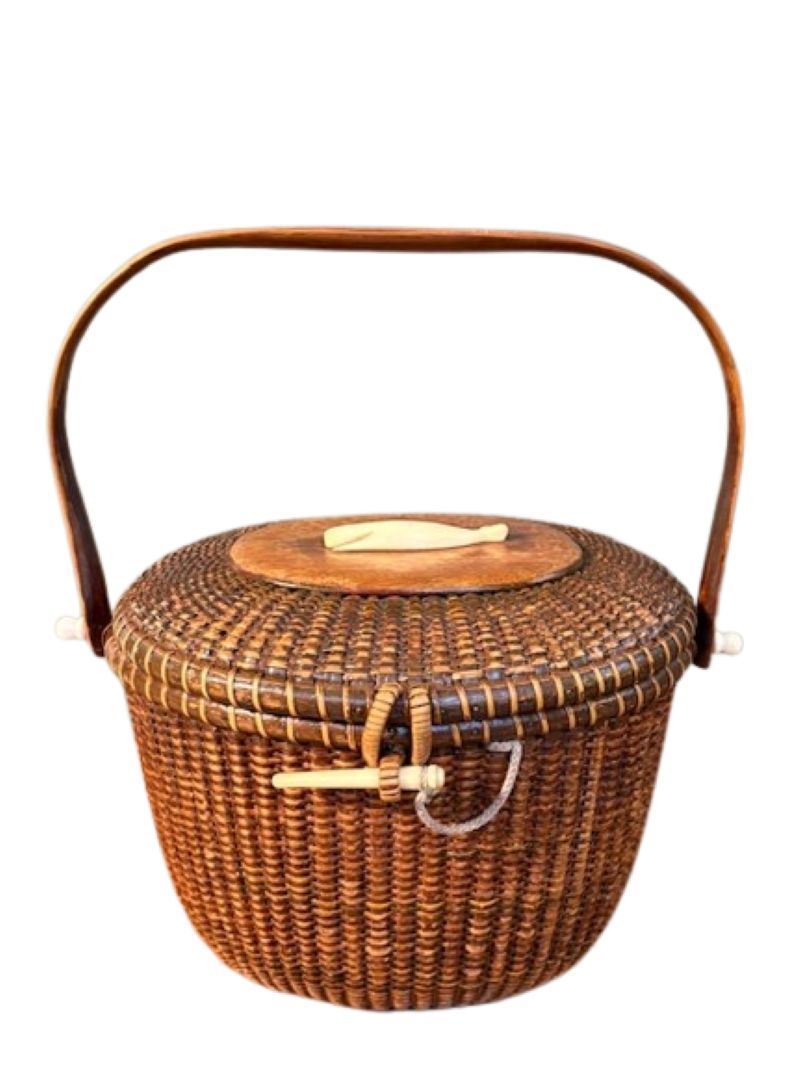
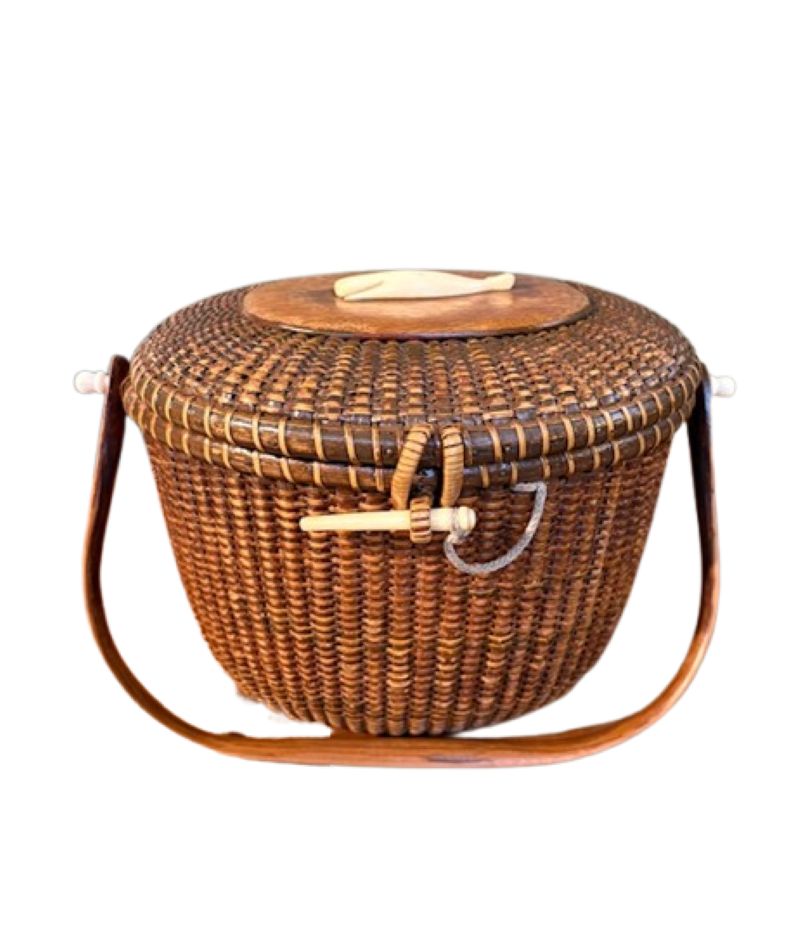
Nantucket Purse by Jose Formoso Reyes, signed, circa 1955
$7,500.00
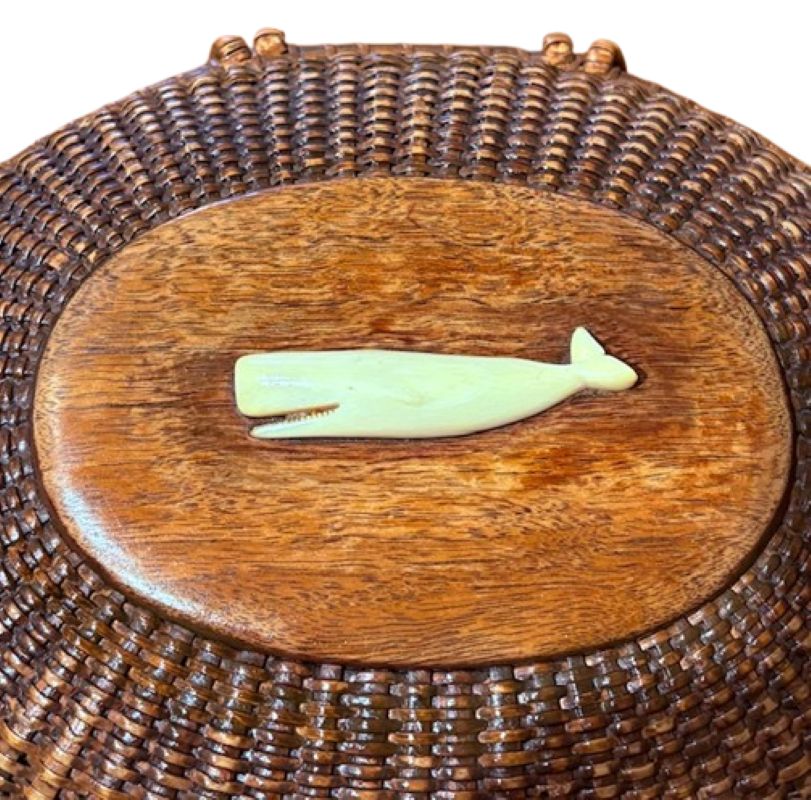
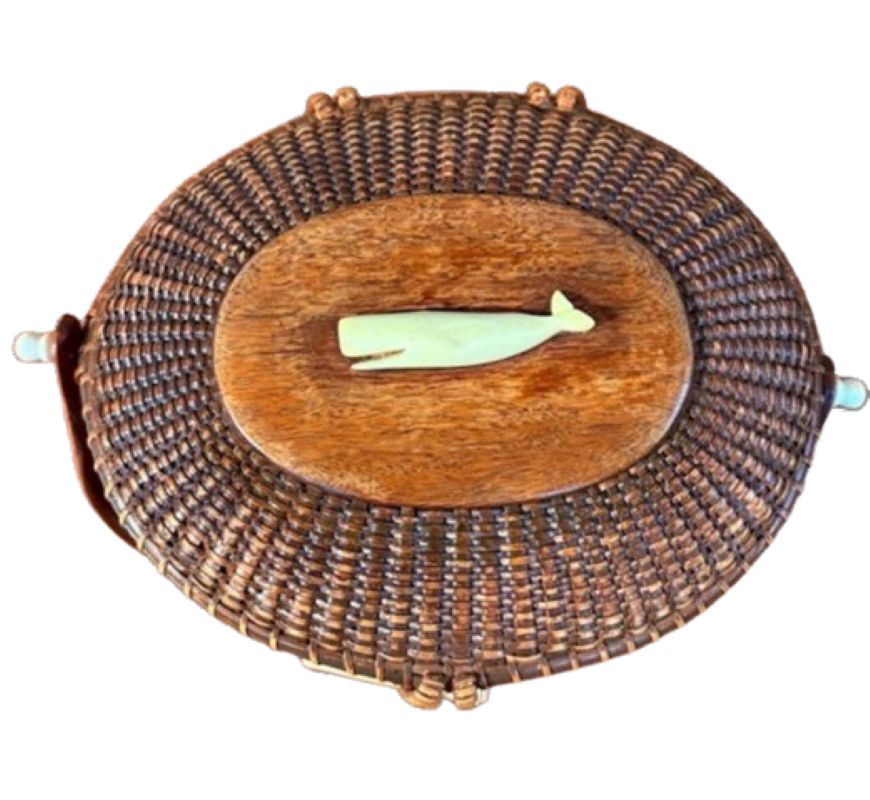
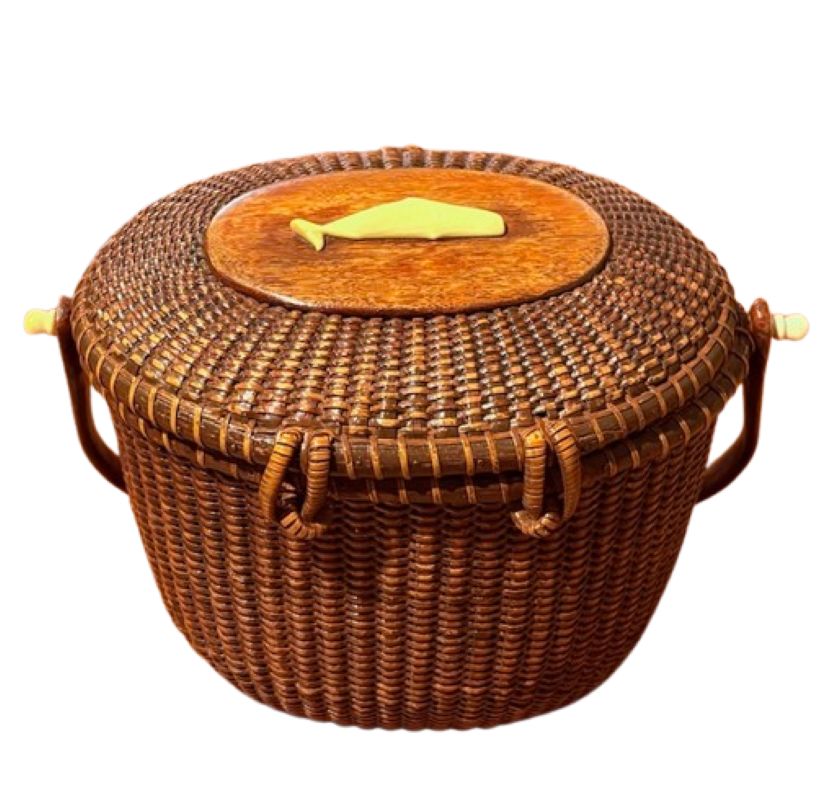
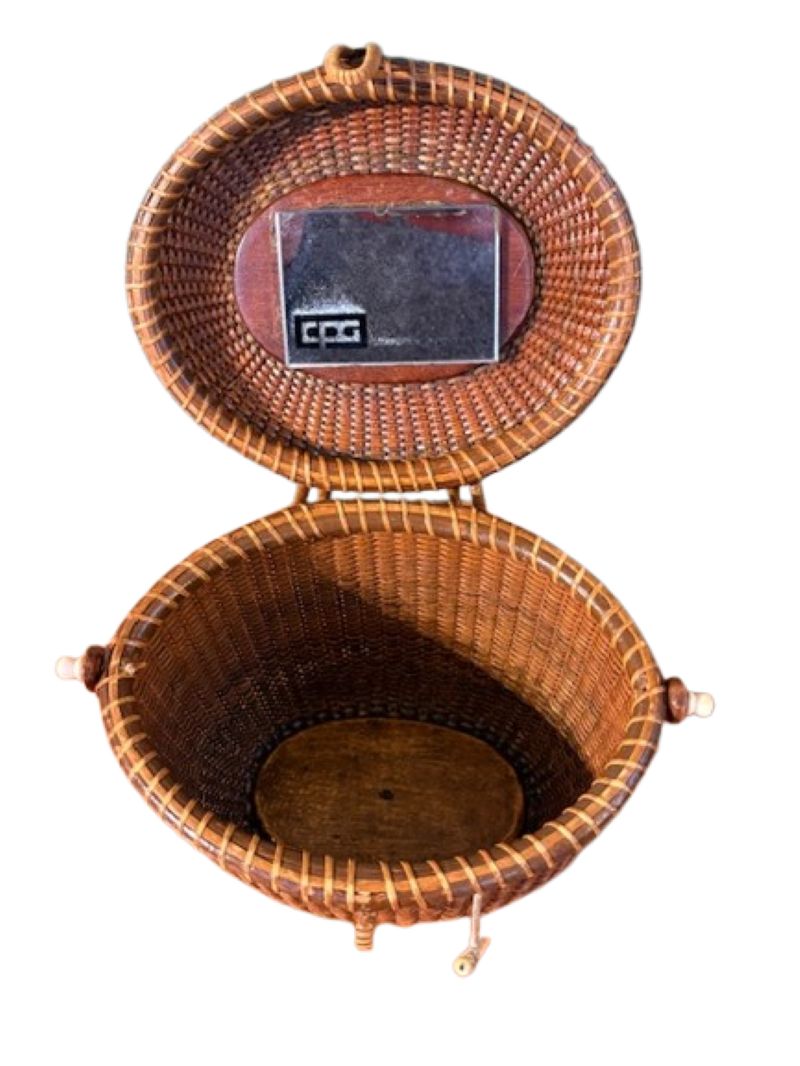
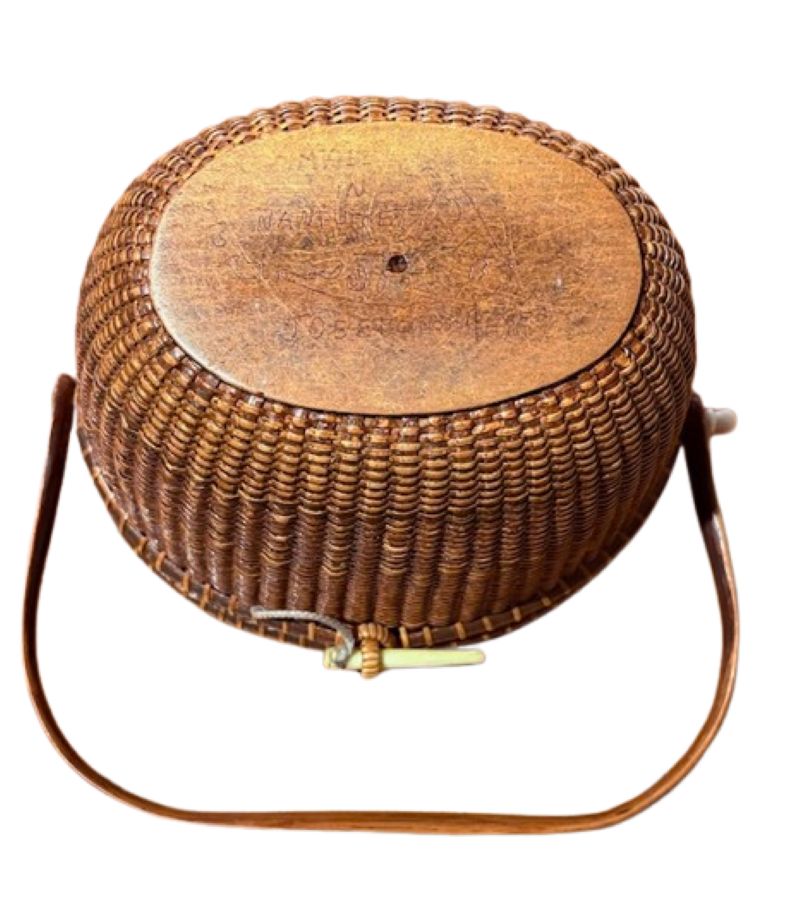
Nantucket Purse by Jose Formoso Reyes, signed, circa 1955, a beautiful oval woven Nantucket basket, having a cane weave on rattan staves, carved swing handle, scrimshaw carved whale tooth peg, knobs, and sperm whale by Aletha Macy on maple top, signed on the bottom Made In Nantucket, Jose Formoso Reyes, with image of island.
In stock
Nantucket Purse by Jose Formoso Reyes, signed, circa 1955, a beautiful oval woven Nantucket basket, having a cane weave on rattan staves, carved swing handle, scrimshaw carved whale tooth peg, knobs, and sperm whale by Aletha Macy on maple top, signed on the bottom Made In Nantucket, Jose Formoso Reyes, with image of island.
The purse remains in very good condition, with a deep patina.
Jose Reyes (1902 – 1980) was born in the Philippines and moved to Nantucket immediately following World War II in 1947. He met Mitchy Ray, the last person on island still making Nantucket baskets at that time, and learned the craft. Within a few years Jose adapted the traditional Lightship basket form to a purse by adding a lid and a swing handle, launching the modern era in the Nantucket basket saga. While Reyes began making his purses in the very late 1940s, he did not begin dating them until 1960. Reyes remains highly revered and collected as a great innovator and the inventor of the Nantucket Purse.
Aletha Macy (1901 – 1971) was born on Nantucket to Charles H. and Susan Dunham Macy, a direct descendant of Thomas Macy, one of the original founders of Nantucket. Early on, her creativity found an outlet in woodworking, often being scolded for her pursuits as a young child. By the age of 11, she was regularly leaving school to watch cabinet maker Lincoln Ceeley work in his shop, The Cooperage. There he made furniture, clock cases, weather vanes, and sailor boys, the iconic Nantucket whirligigs. Mr. Ceeley saw potential in Aletha and took her under his wing, making her his full time apprentice after her junior year of high school. She would work with him for over thirty years, stopping at the time of his death in 1950.
Under Ceeley’s instruction, Aletha learned woodcarving, cabinet making, and reverse painting on glass, which was used for clock doors. As a teenager, she displayed her pieces in the Agricultural Society’s annual exhibition, quickly gaining a reputation for her fine workmanship. Many of her tables and desks could be found in prominent Nantucket homes.
In the mid-1950s, she was approached by basket maker Jose Reyes to carve ivory pieces for the tops of his famous friendship baskets. He had more orders than he could fill and was looking for assistance. Although she had never worked in ivory, Macy agreed; it became her preferred medium. Beginning with sperm whales and sea gulls, Macy, spurred by her love of the outdoors, began to carve other animals, birds and fish. Soon after, she opened her own shop, Ivory of the Sea, on Madaket Road. In addition to Jose Reyes, Macy made the scrimshaw for many of Stephen Gibbs baskets until the early 1960s.
Measures: 6-3/4 in H x 8-1/4 in L x 6-3/4 in W