19th Century Sailor’s Scrimshaw Whale Tooth Depicting Galapagos Tortoises, circa 1843
19th Century Sailor’s Scrimshaw Whale Tooth Depicting Galapagos Tortoises, circa 1843
$7,400.00
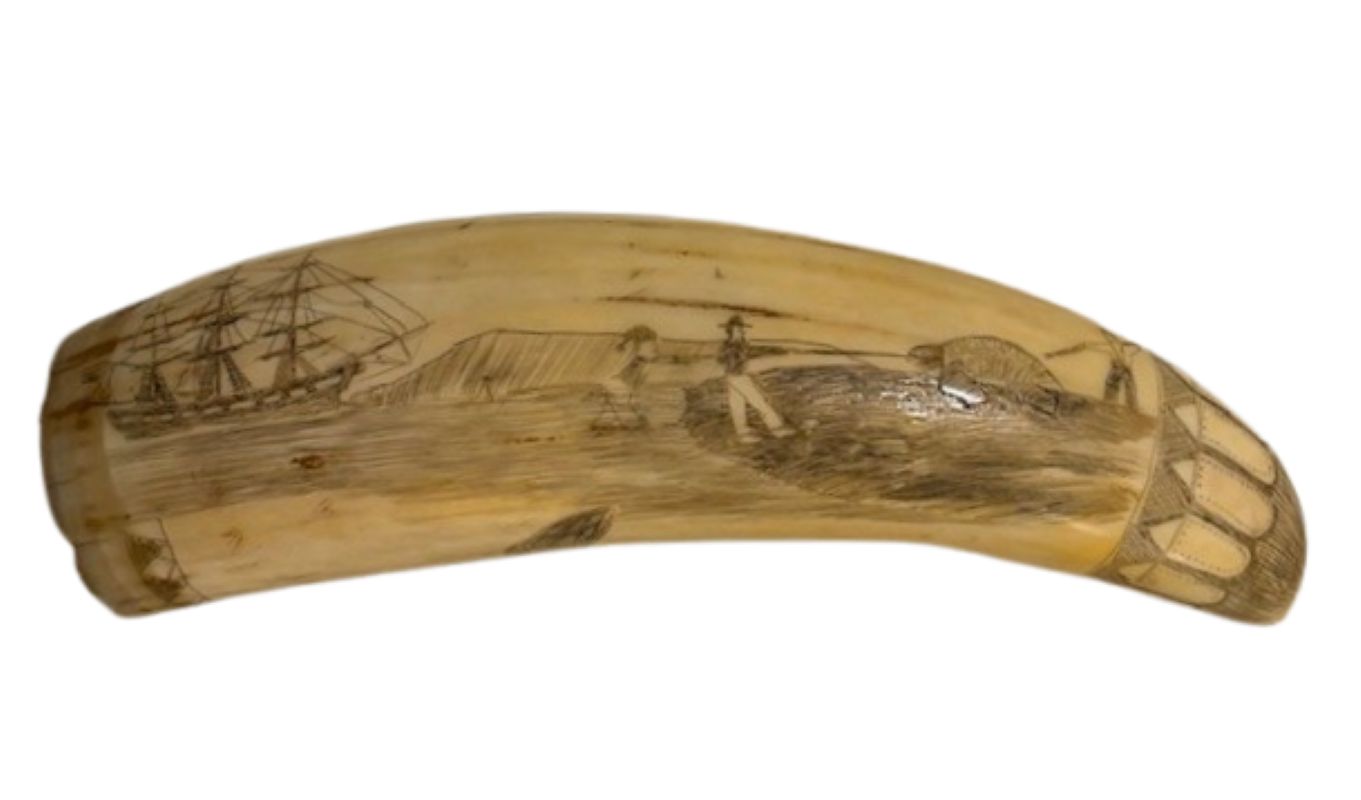
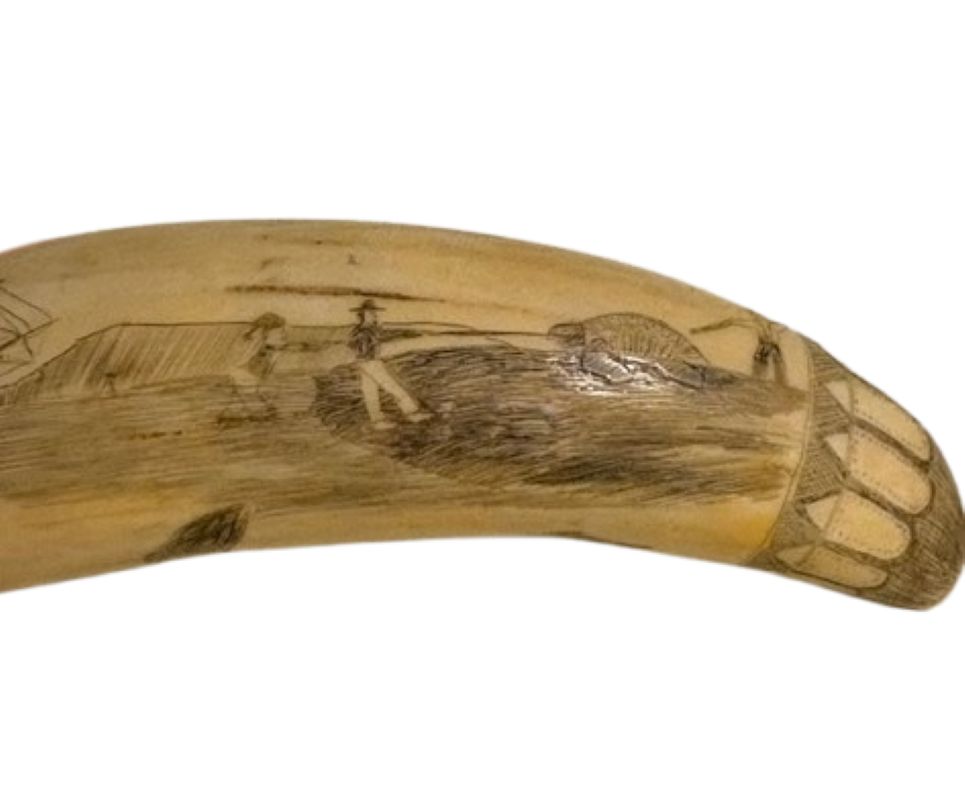
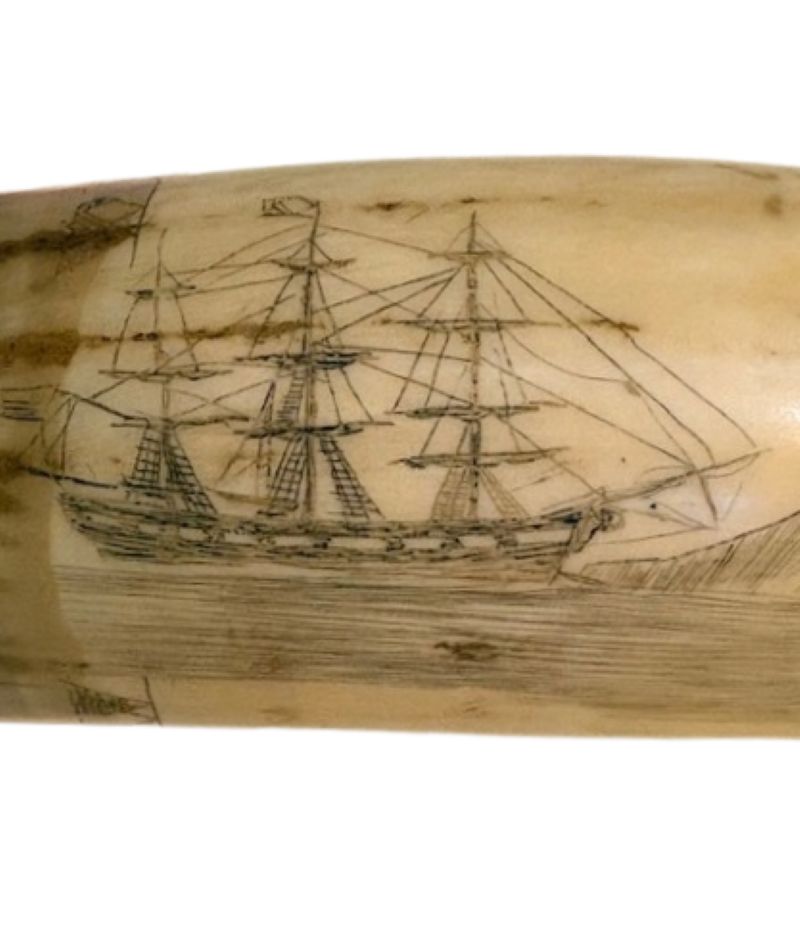
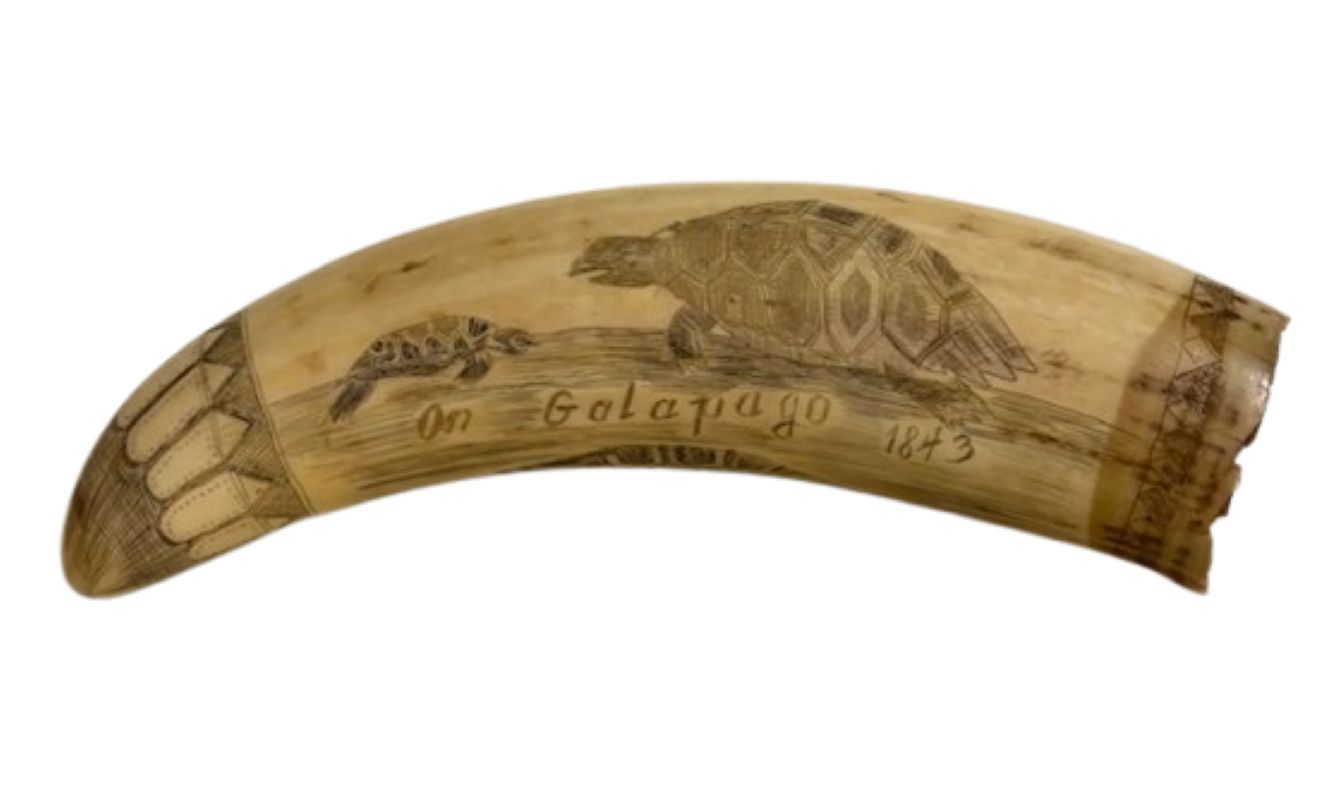
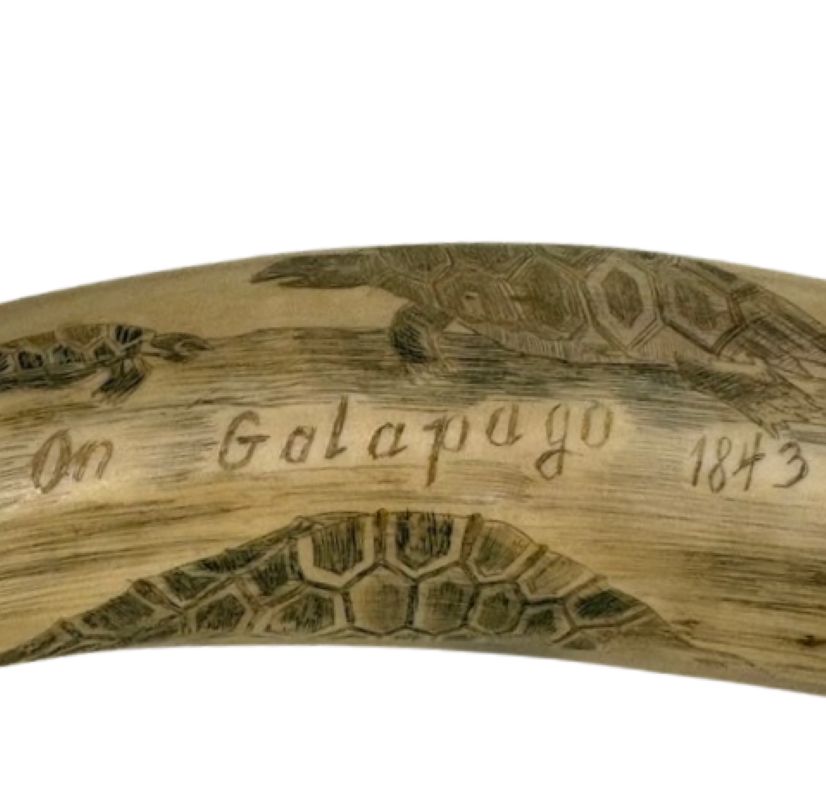
19th Century Sailor’s Scrimshaw Whale Tooth Depicting Galapagos Tortoises, circa 1843, a sailor’s hand engraved sperm whale tooth (Physeter macrocephalous) depicting a ship and sailors collecting tortoises in the Galapagos islands in 1843 with a shore scene on the obverse; mother and young tortoise on the reverse with legend “On Galapago 1843;” and on one edge a depiction of another large tortoise; with wrap-around border at tip of tortoise shell platelets. The tooth has exceptionally fine and delicate engraving.
In stock
19th Century Sailor’s Scrimshaw Whale Tooth Depicting Galapagos Tortoises, circa 1843, a sailor’s hand engraved sperm whale tooth (Physeter macrocephalous) depicting a ship and sailors collecting tortoises in the Galapagos islands in 1843 with a shore scene on the obverse; mother and young tortoise on the reverse with legend “On Galapago 1843;” and on one edge a depiction of another large tortoise; with wrap-around border at tip of tortoise shell platelets. The tooth has exceptionally fine and delicate engraving.
The Galapagos Islands were a popular and frequent safe stop for whaleships in the South Pacific for fresh water, fruit and food. Turtle meat was a common part of people’s diet in that day, so theses giant tortoises were welcomed by sailors for their ability to keep fresh food on board for long periods of time. Ship’s logbooks are rife with mentions of the Galapagos but the subject is quite rare on scrimshaw. It makes perfect sense that a sailor would preserve such an exotic image and memory to share with family and friends back home.
The tooth remains in excellent condition with no cracks, and the artwork remains clear and distinct.
This piece of antique sailor’s folk art is engraved on a tooth from a sperm whale (Physeter macrocephalus), is well over 100 years old, and is in full compliance with federal law as specified in the Marine Mammal Protection Act (1972), Endangered Species Act (1973), and the U.S. Fish & Wildlife Director’s Order No. 210 (as amended 2014).
Measures: 5-1/8 in L x 1-1/4 W